“Thousands are Without Water in Sevier and Jefferson Counties”, published in The Pamphleteer on January 6th, 2023. A call to action for a neglected rural community, necessitating online research and multiple interviews.
English Mountain is in the northeastern part of Tennessee, right in the foothills of the Smoky Mountains. The area is known for its spring, a major water source that releases two million gallons of water each day and is used by bottled water companies like English Mountain Spring Water Company (supplier of water to Cracker Barrel and Great Smoky Mountain National Park Visitor Centers). The people who live there, however, don’t see much of it.
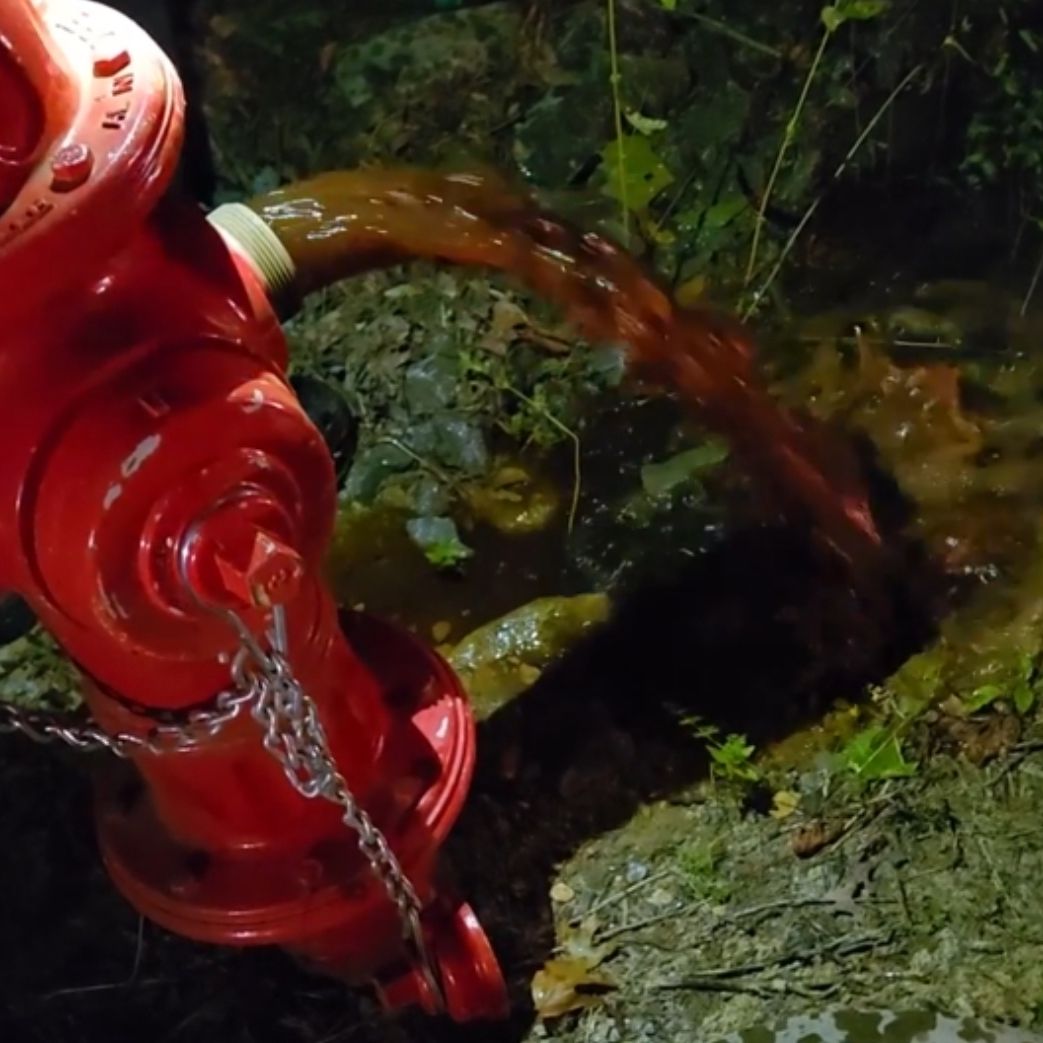
For at least a decade, due to poor management and a lack of infrastructure in the area, water utility pipes have been rusting out and falling apart. During more than half of the days in both 2021 and 2022, at least one person within the community had no water at all. When residents are lucky enough to have water, the quality is questionable at best. Most of the time, what comes out of a faucet in English Mountain looks more like mud than anything one might drink. Fire hydrants have been running brown. Wells and taps across the area test close to the legal limit for iron, manganese, and colony counts of E.coli.
In English Mountain, a community mostly populated by people over the age of sixty, it is common to see tax-paying citizens on canes and walkers, bringing buckets to a pond and kneeling to fill them so they can flush their toilets that day. Many living on the mountain are forced to travel at least forty miles to shower at truck stops and use coin laundry. The situation has been in decline for at least a decade, with no signs of change to come.
Patricia Rogers moved to the mountain in 2012 after her son tragically died in a car accident. When her other son wanted to visit this Thanksgiving, she had to turn him down: there was no potable water in her house. Rogers’ story is all too common for residents in the area, who were out of clean water for eleven days over the 2020 Christmas holiday. The following January, they went nine days without. In July, some were without water for nearly six weeks.
East Sevier County Utility District (ESCUD)– the government office which accepts money from English Mountain residents in exchange for basic utility services– has been not only unhelpful but in the way. As grievances mounted in the area, ESCUD hired a private firm with three employees, Alliance Water Management, to manage the dwindling water supply. The firm initiated a series of programs designed to keep ESCUD out of the red by offering residents a handful of band-aids in lieu of repairing the broken pipes.
One band-aid is a box (or two, if they’re lucky) containing gallon jugs of water. Each box holds three gallons– about enough to flush a toilet twice. As this solution was clearly not adequate, Alliance suggested that residents use a spigot five miles outside of their area, where the local government will allow them to refill six gallon-sized jugs for all of their needs. If a resident doesn’t feel equipped to stand in line to fill their six jugs, they can make a journey to the faucet at the sewage treatment plant—provided they can stand the smell.
For the opportunity to receive those water jugs and travel to fill them, residents on the mountain pay a regular water and sewage bill. Jerry Hayes, a member of the community and neighbor to Rogers, pays over $100 each month between himself and his wife. In instances where residents have refused to pay, ESCUD has threatened to put a lien on their property.
In exchange, ESCUD has consistently given Alliance Water Management an annual raise of fifty to sixty thousand dollars each year. That money has not served to improve the water problems in the English Mountain community, only to line pockets.
THE EFFORTS
Back in 2016, 80 percent of the residents on English Mountain signed a petition to remove the existing board at ESCUD. The response? Alliance workers met with them in a petition organizer’s home, where they proceeded to boast about the good work they’d done by bringing the town’s utility fund from $300 to a few thousand through the aforementioned jug scheme. (Said Hayes of their efforts: “Yes, because you penny pinched us to death.”) The money, of course, had been built up by their neglecting to spend it on necessary maintenance. The rapidly deteriorating pipes hadn’t been repaired or improved.
Eventually, a handful of people began to survey the area on their own, finding and recording each leak in the district pipes. They found that 70 percent of the water that traveled through those old pipes simply ran down the mountain due to leaks. In January of this year, they reported to ESCUD one major leak in the Alpine Drive area. After much pestering, the leak was repaired — in August, seven months later. Each time the people of English Mountain have asked for real help from ESCUD or Alliance, the answer has been direct and disappointing: no one is going to help, and if you don’t like it you can buy water at Walmart or leave the mountain.
As ESCUD continued to assure English Mountain that no one was willing to help them, Ben Harris, the manager of Witt Utility District, was trying. Witt Utility operates just south of English Mountain in Morristown, and another 8,000 homes in Harris’ area currently depend on dwindling, contaminated well water. With proximity to the beautifully clean Nolichucky River, Harris saw an opportunity to bring water to all of them at an extremely low cost.
His first move was to meet the board at ESCUD and propose a merger. With this merger, they could use American Rescue Plan Act (ARPA) funding to finally establish, repair, and maintain pipes, bringing good water to English Mountain. He warned the board that with the state of the existing pipes, people living on English Mountain would soon be without water entirely. The chairman of the ESCUD board agreed, under one condition: Harris would have to ensure he’d be the one paid to lay down all of the new pipes. “I’m not doing that. That’s illegal,” replied Harris, and he moved on to a new plan. That was almost a year ago.
In January of this year, when English Mountain was left without water or power, Harris and his team volunteered to bring a multimillion dollar generator up the snowy mountain to power the area. The group trucked it in, then spent all night setting it up in the snow. Harris told Alliance Water Management that they had to send someone to check the oil in the generator once a day, fill it with diesel regularly, and make sure it was still working. Alliance refused. Harris and his team were forced to bring the generator back down the mountain; Alliance never made use of it.
A SOLID PLAN EMERGES
Harris has spent day and night putting together a real plan, not only for English Mountain, but for the 6,000 other homes on wells in the Jefferson County area. With pipe and pumps on order and a team of engineers, he has drawn up maps detailing the layout of the 257 miles of pipe — along with a full budget. To get the tanks and workers required, Harris needs about $50 million. While that sounds like a lot, the state of Tennessee is currently at a surplus over ten times that amount. The football stadium being proposed in Nashville will utilize $500 million in state bonds. The issue here is that people in these areas of Sevier and Jefferson County are paying for that football stadium in taxes, but still can’t drink regularly or safely from their faucets.
Additionally, as far as large scale utility developments go, $50 million is reasonable. It costs about $12 million annually just to get water through ESCUD now. Harris’ proposed plan wouldn’t just bring water to 6,000 more homes, but supply them with water for 30 years at his price. Prices to bring water to the area from outside of Witt Utility District are significantly higher. While Pigeon Forge and Gatlinburg would spend $45 million to get four million gallons per day, Harris can get twenty million gallons per day at the same cost by taking advantage of proximity to the Nolichucky and the minimal amount of filtration it needs to be potable.
Though Harris asked for an allocation from the state general fund, he was refused with the instruction to get ARPA money. He hasn’t yet been able to get a commitment for it. While the cost of his plan has been in the state budget for both this year and last year, no one will hand over that funding. Now, after waiting another year, pipe costs have gone up 30 percent. On their last leg, citizens are considering reaching out to the Justice Department as their water supply dwindles.
The plan that Harris has put together includes a thick binder of order forms for the new tap supply, workers, diagrams, maps, and graphs. He only needs the money. What’s more, Harris explains, is that this plan is “not just feasible, but profitable.” He has graphed out total consumption of water sold and bought, customers, and miles of pipe. The area, with running water, has the potential to see about a 20% increase in property values. With Sevier County having the highest sales tax allowed by the state at 9.75%, that means this plan will pay for itself with ease. And this is only phase one of his plan— phase two would bring water to two thousand more homes along Douglas Lake.
WHAT NEEDS TO HAPPEN
Since proposing the merger with ESCUD, Harris has met with many other local utility districts in the hope of merging for some help. None have been able to offer an affordable, viable solution. He’s also been to the local mayor, the Tennessee Department of Environment and Conservation (TDEC) in both Knoxville and Nashville, the Senate floor, and even had a visit with Governor Bill Lee.
TDEC in Knoxville has been the only group to sign on in support, telling those ignoring the issue in Nashville that Witt Utility is the only group capable of fixing the problem, and that they need money. Money still hasn’t come. “I’ve done everything I can to get water for this community,” says Harris. Members of the English Mountain community say Witt Utility District, Senator Frank Nicely, and Senator Steve Southerland are the only people who have listened to them. Nicely himself has spoken on behalf of the Jefferson County people on the Senate floor, but collective priorities lie elsewhere.
Harris and the English Mountain people contacted the Utility Management Review Board (UMRB) in Nashville to conduct an investigation into ESCUD and Alliance, in an effort to finally rid the area of the corrupt organization. With no word from UMRB yet, the community have pitched together to rent a charter bus, and this Thursday, December 8th, about forty people from English Mountain will be at the UMRB meeting in the Cordell Hull building. They will be there to “ask for help as a community” and hear about the results of the investigation. Rogers, fearing she will have to leave the home she loves, notes, “If we don’t get help, we’re at [ESCUD’s] mercy.”
The people of English Mountain and the surrounding area are out of water, and need it now. The only way for that to happen is for Mayor Waters (of Sevier County) to declare a State of Emergency so Witt can get the funding it needs to start right away. Harris is sure that he can lay an average of one mile of pipe each week, and have potable water back in the area in only three months — barring any unforeseen circumstances or delays. After years of struggle, this can be fixed.
The English Mountain community, surrounding area, and Harris fear that they are alone in this fight. Few people are even aware of the dire situation in our own East Tennessee Mountains, and many won’t speak up. This is one situation in which collective pressure and attention can actually be helpful. To you, reader: tell a friend, pressure your state legislators, and, if you like, join the English Mountain community at the Cordell Hull building this Thursday and show them that they aren’t alone — do bring some extra water.
“The Sated Artist,” published in The Pamphleteer on January 26th, 2023. A love letter to a creamerie and farm necessitating an interview, visit, tour, and tasting.
Driving through the rolling hills about two hours southeast of Nashville and taking in the perfumed air, it was easy to see how one could devote their life to the land there. Padgett and Nathan Arnold of Sequatchie Cove Creamery embrace that devotion not only with responsible stewardship of the soil, but in the creation of a product that clearly expresses that stewardship: fine artisan cheese.
Everything from the land itself, to the seasonal transformation of local milk, to the cows that provide it and the microorganisms in the air come together to give birth to what Nathan—the resident cheesemaker—conceives. “All of the lifeforce here connects back to the region,” marvels Padgett. Each cheese they create is a “snapshot of this place and time and season and this lifeforce.”
Healthy animals and healthy soil are the beginning of providing healthy food, but cheese is unique: as a fermented product, climate and altitude come into the dance. Padgett Arnold, who handles a variety of business-end variables for the creamery, finds fermented products special in their “special ability to harness these elements in a way you can’t really see.”
THE VERY BEGINNING
The Arnold’s fascination with agriculture came long before their involvement with Sequatchie Cove Creamery. In 1998, the couple helped found Crabtree Farms—an urban farm and community center—in Chattanooga. At that time their energy was largely spent on growing vegetables and flowers at the farm, which eventually evolved into a CSA. It wasn’t until 2003 that they began working in Sequatchie.
As Nathan’s involvement with the creamery grew, he handed Crabtree completely over to Padgett, immersing himself in the art of cheesemaking. On a tour of the greatest cheesemaking regions in the world — Vermont, Canada, Switzerland, and southern alpine France — he listened, learned, and practiced. Upon returning to Sequatchie, he began hand milking cows for fresh milk, bringing it home, and trying his hand at perfecting his own cheeses. This was the very beginning of Sequatchie Cove Creamery as a provider of particularly fine cheese.
In 2009, things started coming together on both ends: After many attempts, Crabtree finally established a farmer’s market called Main Street Farmer’s Market in Chattanooga. At the same time, the Arnolds were working in development with the creamery, starting with the construction of the cheesehouse. In 2010, they got a license to sell their cheeses, and both shifted their focus to the creamery more fully.
IT AIN’T EASY MAKING CHEESE
For eleven years, Sequatchie Cove Creamery maintained its own herd of pastured and grass-fed cows for the production of their milk. Unfortunately, the labor shortage of 2021 forced the farm to disperse them. While Padgett has found that the involvement of other local milk in their production is rewarding, they would like to have a herd of their own again. “We have an opportunity to build something for the dairy industry in Tennessee,” she states.
The Tennessee dairy industry could certainly use a little something. Between 1959 and 1969, farms that cared for dairy cows decreased by 72% — and we haven’t gotten them back. Part of this is due to demand and consolidation, but cost is a major factor. “Small family dairies hardly have a way to exist anymore,” explains Arnold. Because a lactating cow requires more, high quality food than beef cattle, dairy farms are on the more extreme end of the economic disadvantage. Combine with that the natural downturn in milk supply during the colder months, and small farmers will look to make their wage elsewhere.
Charles Mayfield, of the Mayfield Dairy family, notes that the beverage industry is awfully competitive. With the rise of sugary sports drinks, milk has witnessed its popularity decline. “The sports drink of choice forty years ago was milk,” he says. For years now, this hasn’t been the case. Much of milk’s decline can be explained by how our own tastes have shifted due to a misplaced fear of fat. Schools offer children skim milk (which is effectively tasteless) and chocolate milk. “[Chocolate milk] is not getting them addicted to milk,” says Mayfield. “It’s getting them addicted to sugar.” The anti-fat push coinciding with the rise of sugary drinks has meant that the last few generations have been opting for a soda or Powerade over fresh and local dairy.
There are plenty who enjoy milk, but simply can’t stomach the ultra-pasteurized stuff that is broadly available. I myself spent years believing I was lactose intolerant before I finally got ahold of the raw stuff, learning that flavorful and highly digestible dairy existed—I just hadn’t been allowed to have it. In most of the United States, raw milk is simply illegal, and where it isn’t, it is prohibitively expensive. Those who want to get some here in Tennessee have to turn to cow-share agreements, which take a bit more effort than a run to the supermarket.
SOMETHING FOR TENNESSEE DAIRY
Sequatchie Cove Creamery currently carries four special cheeses, each inspired and utilizing the beauty around them in a unique way. Expressing Arnold’s philosophy, all of them are named for a location around the Sequatchie Valley. Cumberland (as in the plateau) is their first cheese, a raw milk product inspired by French alpine tradition: an old world European table cheese known as a tomme. Every village has its own version of a tomme, which has a natural rind that expresses its environment. Coming in a three or four-pound wheel, Cumberland will take on different characteristics seasonally because of this organic process. In the spring and summer, the wheel will take on a warm, gold color due to the chlorophyll in the milk it’s made from. In the winter, that color will appear much paler. This is a feature the creamery chooses to highlight: this cheese is very much a product of the exact time and place it was crafted.
Coppinger (as in the cove) is a raw milk cheese as well, in about the same size. Its closest cousin is the old world French morbier. Both have an aesthetically pleasing line of black ash which runs through the center, making Coppinger “absurdly popular,” in Arnold’s words. Coppinger is made with a washed rind process, which means it is washed with brine regularly in a controlled environment. Arnold makes the distinction that a washed rind cheese is made by “harnessing the activity of bacteria,” and a natural rind uses the activity of natural yeast and mold.
Walden is a small format, pasteurized version of the French reblochon—where a traditional reblochon is made from raw milk and sold after forty days of ripening, United States law dictates that raw milk cheese here must ripen for at least sixty. Nathan Arnold wanted to bring this unique cheese to us and developed Walden from another cheese he made called Dancing Fern. Dancing Fern had some trouble in that it had to be sold right at day sixty, and came in a one pound wheel that wouldn’t keep for long enough once sold. It was wildly popular at the time, but these snags brought him to the decision to alter the composition. Walden was the answer to this, coming in a seven ounce wheel that has 55 to 60 days of shelf life. “It’s not brie, and it’s not camembert,” explains Padgett, “but it’s in the same family.”
The Shakerag Blue is a blue cheese, but not just any—this treat is wrapped in fig leaves (often picked by Padgett herself) that marinate in a Chattanooga whisky. The leaves are picked over three months and then set in the whisky where they are preserved and taken out throughout the year as the cheese is made. Shakerag is a star and just won first place in the Blue Cheese category at the American Cheese Society’s Conference and Competition. It’s also now my favorite cheese.
“We have a lot of struggle and turmoil in our story,” says Arnold, “but we have this dream that hasn’t changed.” Their partnership with the Keener family—the owners of Sequatchie Cove Creamery—has provided the Arnolds the opportunity they seize daily. Beyond their fantastic cheeses, the farm produces high quality meat, eggs, and vegetables. And the milk? Arnold finds that after a year of sourcing it elsewhere, the process and product are just as special. “New discoveries and appreciations have come through sacrifice,” she smiles.
The farm itself is special. Run by four generations of Keeners alongside the Arnolds, the land is beautiful, natural, and home to a family of other animals. After my chat with Padgett, I took a walk around the property, enjoying the company of beef cattle, strangely social chickens, a very sweet golden cat named Honeybun, and the chickens’ guardian: an absolutely loveable Great Pyrenees named Little Jim. Little Jim ran alongside me as I took in this land and air teeming with life, appreciating how it all came together to make the expertly crafted cheese waiting for me in my coat pocket.
“Tao Te McKay’s,” published in The Pamphleteer on July 31st, 2024. A personal account of an interstate commercial event necessitating multiple interviews and an extremely long, fraught road trip.
McKay’s Bookstore’s 50th birthday made state news early this month when the Knoxville Fire Marshall had to shut down the city’s store location—upwards of five thousand people were lined up in their parking lot that afternoon, and twenty three were hospitalized for heat exhaustion.
Knoxville wasn’t the only city affected by the birthday celebration. The event sent close to ten thousand book enthusiasts to five locations: Mebane and Winston-Salem in North Carolina, and Knoxville, Chattanooga, and Nashville here in Tennessee. For many of these stores, the crowds that built in their parking lots were more than anyone anticipated. Knoxville—being in the center of all five—saw the convergence of these crowds. Though the vast majority started in Mebane, others, like my group, began in Nashville.
The central location of Knoxville was where both groups converged. Everyone in the city dealt with a massive amount of traffic. Cars going to McKay’s had lined up in a standstill all the way onto I-75, and Knoxville Police eventually closed roads as the Fire Marshall had the store closed. It was also the hottest part of the day, on a day when temperatures were reaching close to 100 degrees. The Knoxville Fire Department had brought a bus into the parking lot, instructing patrons to go inside if they felt faint. It filled up quickly.
Those who did not make the trip got the early-aughts Black Friday horror story version of this story but I, like thousands of others, did make the nine hour journey. I spoke with dozens of other roadtrippers along the way and after the fact, and the consensus is clear: everyone is grateful to McKay’s for providing the opportunity for an extremely rewarding, fulfilling adventure — despite the struggle adventure presents.
WHAT WAS MCKAY’S ULTIMATE ROAD TRIP?
McKay’s was founded on July 9th, 1974 with the belief that traditional systems of education restrained learning and with the intention of providing an alternative. They did this by creating what they called a “free enterprise library” — a place where people could obtain books at very low prices, keep them for as long as they pleased, and return them for credit toward other books later. The first store was called Edward McKay, and was in North Carolina. When the brand split ownership, McKay’s opened the Knoxville location in 1985. Today, they carry books of all kinds, records, CDs, movies, games, electronics, and musical instruments.
So, when for their 50th birthday celebration they offered a total of $800 store credit to anyone who made it to all five locations within 14 hours, people swarmed. The rules were simple: starting at 8 a.m., roadtrippers aged 18 or older could get their McKay’s passport at any location. From there, they had until 10 p.m. to get that passport stamped at each one, collecting store credit and commemorative prizes along the way. At the second location visited, there were t-shirts; at the third, $50 of McKay’s credit, a travel mug, and snacks; at the fourth, $250 of McKay’s credit and a poster; and finally, at the fifth, $500 in McKay’s trade. Of course, the store did disclaim that prizes would only be handed out while supplies lasted—but everyone would receive store credit regardless.
By 6:30 a.m. on July 9th, employees of the Mebane McKay’s realized the event was much larger than anticipated—thousands of people had already gathered outside of the store. The rules were changed immediately, and all McKay’s employees began handing out and stamping passports early. By 8 a.m., it was clear that there was no way to work quickly enough—over five thousand McKay’s fans were blocking roads in the city of Mebane. As the hours passed, some parked along the interstate, climbing a chain link fence to get their passport. Throughout the day, rule changes occurred for similar reasons. Eventually, people could get their passports stamped for multiple locations by only visiting one, and the closing time for all stores was changed to midnight.
WHY I HAD A GREAT TIME
I took the McKay’s roadtrip with three other women, all three McKay’s enthusiasts. I myself had been meaning to visit the store for years, but never made the time. The other women planned our trip meticulously—analyzing social media posts, store data, charting multiple routes, and crafting a menu of roadtrip snacks so we wouldn’t stop anywhere unnecessary. Ultimately, the three of them decided that it seemed too many people would be starting in Mebane. So, we met in Chattanooga at 6 a.m., and immediately piled in the car for Nashville.
I pulled an all-nighter just to make it in time, not wanting to disappoint. This ended up being my contribution to the roadtrip: I was told that in my delirious and sleep deprived state, I “kept everyone laughing” for the 14 hour journey.
There was some consternation among the group at 6:30, as word reached us that stores had already begun handing out passports. They had planned meticulously. How was this fair? But, no one had any idea of the chaos that was brewing in Mebane. When we reached Nashville’s store before 8 and were out within 15 minutes, however, everyone felt a surge of adrenaline. Our return to Chattanooga was similarly smooth, and spirits were high as we made our way on to Knoxville.
We arrived in Knoxville before 1 p.m., but it immediately became clear that we were seeing the blending of both roadtrip groups. We sat on the access road for about a half hour, and the parking lot was a snaking line of hot, tired book lovers. Luckily, because we had a group of four, we were able to take turns standing in line, going inside to use the restroom, and waiting in the shade. About 30 minutes into this ordeal, a McKay’s employee began running down the line to stamp passports. As they reached us, a police officer stopped them: the traffic was dangerous, and the crowds were impeding traffic. Something had to be done.
One of the original founders of McKay’s stepped outside to hand out store credit, sweating in the hot sun with the rest of us. After an hour, my group was back in the car and headed for North Carolina. It was still early in the afternoon. As we rode our way down Blue Ridge Parkway, we got word that the situation in Knoxville had worsened and 23 people were hospitalized. The Fire Marshall had asked that the store shut down. About an hour away from Winston-Salem, we watched the news report. That’s when I thanked the other women for their careful planning, and they thanked me for being a disoriented stream-of-consciousness commentary track for their entertainment.
At Winston-Salem, there was absolutely no line. We cheered as we left the car, were given many prizes that had run out at previous stores, and even looked around a bit. At Mebane, we waited for five minutes, got our $500 in store credit, and shopped. Using only half of my pretend money, I bought something I had wanted for over ten years: a cello. It was 8 p.m., and everyone was delirious with joy. We went to a local brewery for dinner, and retired at an AirBnb with a hot tub. Not one of us was concerned with the way the McKay’s Ultimate Road Trip rules had changed throughout the day.
WHAT ABOUT EVERYONE ELSE?
As I made my way through crowds and long hours in the car, my friends reported on activity in the Facebook group, “The Ultimate McKay’s Road Trip.” The group alone saw over 3.5 thousand members sharing details, traffic reports, and line conditions. Though some complained and even protested the conditions they were—willingly—suffering, the general consensus within the group was an overwhelming sense of gratitude. This sentiment was echoed as I spoke with other people in line, who, despite being hot and tired, were excited to be able to participate in such a singular event.
Andrea Baker of Chapel Hill was among those who started in Mebane, camping the night before only 20 minutes from the McKay’s location. She headed to the store at 6:40 a.m. that morning, but due to traffic and parking didn’t actually make it into line until 7:30. They had parked at Chick-fil-A, and “getting out was a nightmare.” The story at Winston-Salem was similar, and by the time they reached Knoxville’s location, they had opted to park over a mile away rather than navigate closed roads and traffic. They arrived not long before the location was shut down, and at 5:30 the sea of other participants was churning with Knoxville’s rush hour in what Baker calls a “huge cluster mess.”
They followed the wave of chaos to Chattanooga, where two lines had formed: one for people insistent upon going along to Nashville, and another for those who wanted to “cash out,” getting the full credit despite not being able to make the full journey. Baker and her husband joined the second. Was it all worth it? “There were laughs and there were tears,” says Baker. “We made memories and talked to some really cool people. We planned accordingly and not a single plan that we made… actually took place. Would we still do it again? Yes.”
Two other Mebane starters, Cordelia Allen and her husband, arrived in Mebane at 6 a.m. after only two hours of sleep “because [they] were so excited.” They were glad they did. Allen said she was amazed by the turnout. “McKay’s felt so small town to us, and it was such a shock and so amazing to see it turn out the way it did,” she wrote. “We stayed just ahead of the crowd at each stop—but just barely. It felt like we were being chased in the best way!” She added that she and her husband were “so grateful” to McKay’s and hope they are around for another 50 years or more.
Every other story I collected was similar. Those who started in Nashville suffered mildly and made a fantastic, core memory. Those who started in Mebane did the same, suffering at varying greater degrees depending on their start time. Many expressed enormous thanks to McKays and their employees, and some even brought gifts of donuts, coffee, and pizza to the stores as they went along.
Allen Reynolds, another roadtripper, echoed a sentiment shared by many who made the wild journey on Tuesday, July 9th: how decent the crowds were all along the way, despite our circumstances. “People were kind to each other,” he states. “In Mebane in the morning, people helped cars get through the massive crowds… I don’t think I even heard one honk. It was actually kind of restoring of faith in humanity, especially with how the world’s been going the last several years.” I agree wholeheartedly. I saw some of the most deliberate and polite zipper merges I’ve ever seen, even as thousands competed for $800, a mug, a poster, and a t-shirt — sweating and sleep deprived.
Did I become horrifically ill the day after I returned home? Yes. Am I still mentally recovering from 48 hours where I was unable to be alone? Absolutely. But I have no regrets. There are few things left to do today as innocent and fun as drive around used bookstores among ten thousand people who prefer to stay in with a nice game, record, or story. I’m doubtful that another similar event will take place again. While I adore my new cello, my books, and my Polaroid camera, I find that the commemorative travel mug I never wanted in the first place is deeply treasured. When I carry it out like a trophy, I may just run into someone who shared a genuine experience with me—both of us having suffered and smiled.

